
Blog
The Chinese robot army transforming the UK’s retail industry

Every time you click “buy” on an online order, the chances are that your purchase starts getting processed within minutes.
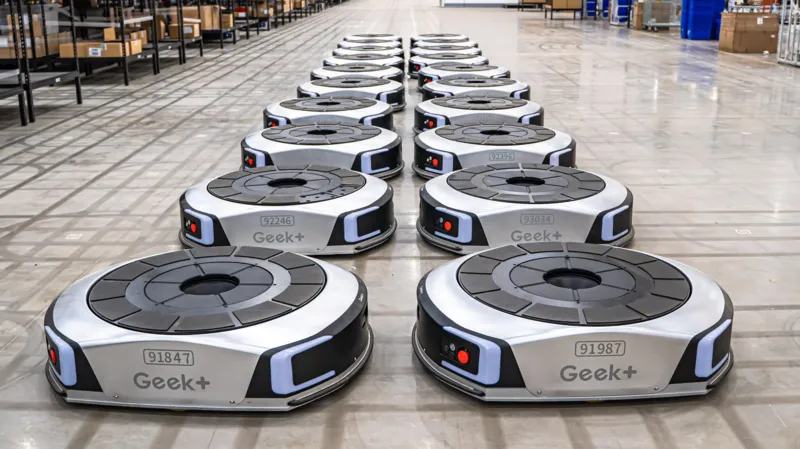
Increasingly, the journey starts with a squat silver floor robot gliding beneath a storage rack, lifting a shelf and carrying it across a warehouse to a waiting worker.
At Geek+’s factory in the eastern Chinese city of Hefei, which the BBC visited, fleets of the robots are built and tested before being shipped to warehouses around the world.
Some of Britain’s biggest retailers – including Tesco, Asda and Next – now use the company’s technology.
By automating these repetitive journeys, Geek+ says retailers can increase picking speeds, store more goods in spaces that are hard to reach for humans, and reduce errors.
The UK has struggled with weak productivity growth for more than a decade, and economists say wider adoption of robotics will be essential if businesses are to become more efficient.
In its 2026 report SME Technology Adoption in the United Kingdom, the Organisation for Economic Co-operation and Development (OECD) said technologies like robotics would be key to improving productivity.
According to the OECD, Britain’s low adoption of robotics is “surprising” given its manufacturing heritage, noting that while UK firms have embraced mature digital technologies, they lag behind in robotics and automation.
That presents an opportunity for companies such as Geek+. The UK has one of Europe’s largest e-commerce and logistics sectors, but many warehouses are still in the early stages of automation.
Britain has already become Geek+’s biggest European market, with UK partner MotionTech deploying more than 2,000 robots across 10 warehouse sites.