
Blog
The English stately home where Nazis were tricked into spilling their secrets

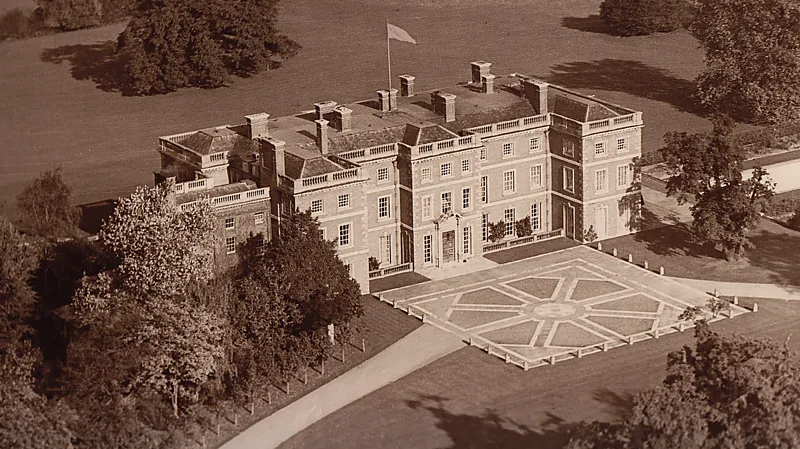
At north London’s Trent Park during World War Two, high-ranking Nazi prisoners of war relaxed and chatted in the elegant upstairs – while downstairs, “secret listeners” were eavesdropping. What they heard changed the course of World War Two.
Trent Park House of Secrets certainly lives up to its name. While the exterior and ground floor rooms of this elegant house in north London showcase the refined taste of the great pre-war host and aesthete, Sir Philip Sassoon, those who venture into the basement will discover a little-known story of World War Two espionage and intrigue.
Warning: This article contains mentions of the Holocaust that some readers may find upsetting.
Last month, Trent Park opened for the first time to the public as a museum, paying tribute to its crucial wartime role. There it was that a team of “secret listeners”, many of them German Jewish refugees, eavesdropped on high-ranking German prisoners of war held at the house. These Nazi generals were oblivious to the fact that their every word was being bugged. Lulled into a false sense of security, they let slip vital intelligence that changed the course of the war.
Highly luxurious
Politician and art collector Sir Philip Sassoon inherited Trent Park in 1912, and in the 1920s set about completely remodelling the exterior and interior in the then highly fashionable neo-Georgian style.
He creates this very elegant, calm, understated architecture and the interiors are very much the same – uncluttered, very spacious, with a small number of fabulously beautiful and valuable antiques,” Simon Thurley, Trent Park’s senior advisor tells the BBC. Exquisite Chinese wallpaper and family portraits by Philip de László and John Singer Sargent adorn the walls.
The house was a highly luxurious prison which was intended to make the high-ranking Nazi officers lower their guard
The ground floor interiors of this stylish house have now been meticulously recreated. “People will feel like they’re stepping back into Sassoon’s world on the ground floor,” says museum director Giuseppe Albano, “but then of course they go downstairs.”
Wired for sound
Downstairs is indeed a very different matter. Sir Philip died in June 1939, and when war broke out in September the house was requisitioned by the British Government. It had been identified by Thomas Kendrick, one of the British Secret Service’s most senior spymasters, as the perfect spot for a Combined Services Detailed Interrogation Centre (CSDIC).